
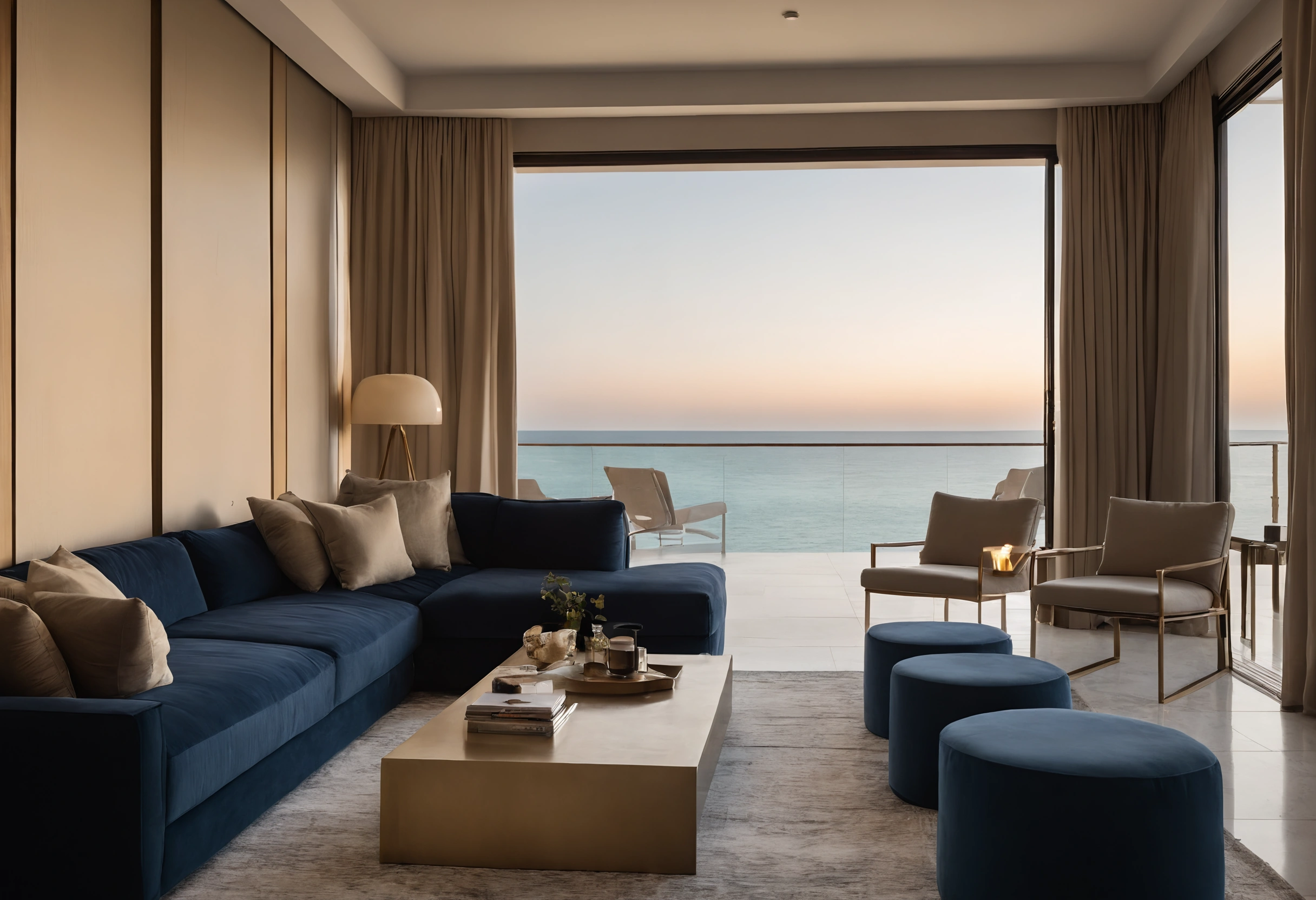
Resort interiors survive salt air, strong sun and constant use because their materials are chosen against test reports, not showroom samples. A buyer on Al Marjan Island can ask for the same proof. Solomia Design is an award-winning luxury interior design company in Dubai with 17+ years of practice, 200+ turnkey projects and six International Property Awards delivering villa, penthouse and commercial interiors across the UAE.
Ras Al Khaimah has 64 kilometres of beaches, according to the UAE government portal, and an apartment close to that shoreline faces the same humidity, glare and salt as the resorts beside it. Hotels cope by naming a test for every surface. Before you finalise a fit-out, read the off-plan property checks on escrow and handover, then take the list below to your designer and suppliers.
- Ask every fabric supplier for the Martindale abrasion report for the exact cloth, and keep it with the order.
- Request wet and dry slip-resistance results for each floor tile, including the bathroom and terrace.
- Ask for laboratory sound transmission class results for entrance and bedroom doors, then inspect seals at handover.
- Require the salt spray test standard, exposure period and pass criteria in writing for taps, handles and hinges.
Fabrics that survive daily use and strong sun
Upholstery in a hotel lobby is tested before it is bought. The usual yardstick is the Martindale abrasion tester, and a supplier who quotes a rub count should be able to hand you the report for that exact cloth. Treat the number as a way to compare fabrics, not as a promise about your sofa.
ASTM International describes standard D4966 as covering abrasion resistance of textile fabrics of all types on the Martindale tester, yet states that the method is not considered satisfactory for acceptance testing of commercial shipments because the precision between laboratories is poor. In practice, compare rub counts only when they come from the same method, and inspect the delivered cloth against your approved sample.
Sun is the second test. Sunbrella states that every fabric it makes uses colour-through-the-fibre technology, in which the fibre is saturated with UV-stabilised pigment before it is spun into yarn. For curtains and cushions beside floor-to-ceiling glazing, that is the principle to look for: colour carried through the fibre, not printed on its surface.
Floors and wet areas: slip resistance first
A polished stone floor photographs well in a lobby and becomes a hazard when wet. Hotels therefore ask for friction data for the condition the floor will actually meet, which means a wet result for bathrooms and terraces, and a dry result for living areas.
ASTM C1028 measures the static coefficient of friction of ceramic tile and similar surfaces under both wet and dry conditions, in the laboratory or in the field. Its sibling, D2047, covers polish-coated flooring and states that it is not intended for wet surfaces. A figure from the second method therefore says nothing about a wet bathroom, so ask which method produced each number you are shown.
Doors and walls: what a sound rating really tells you
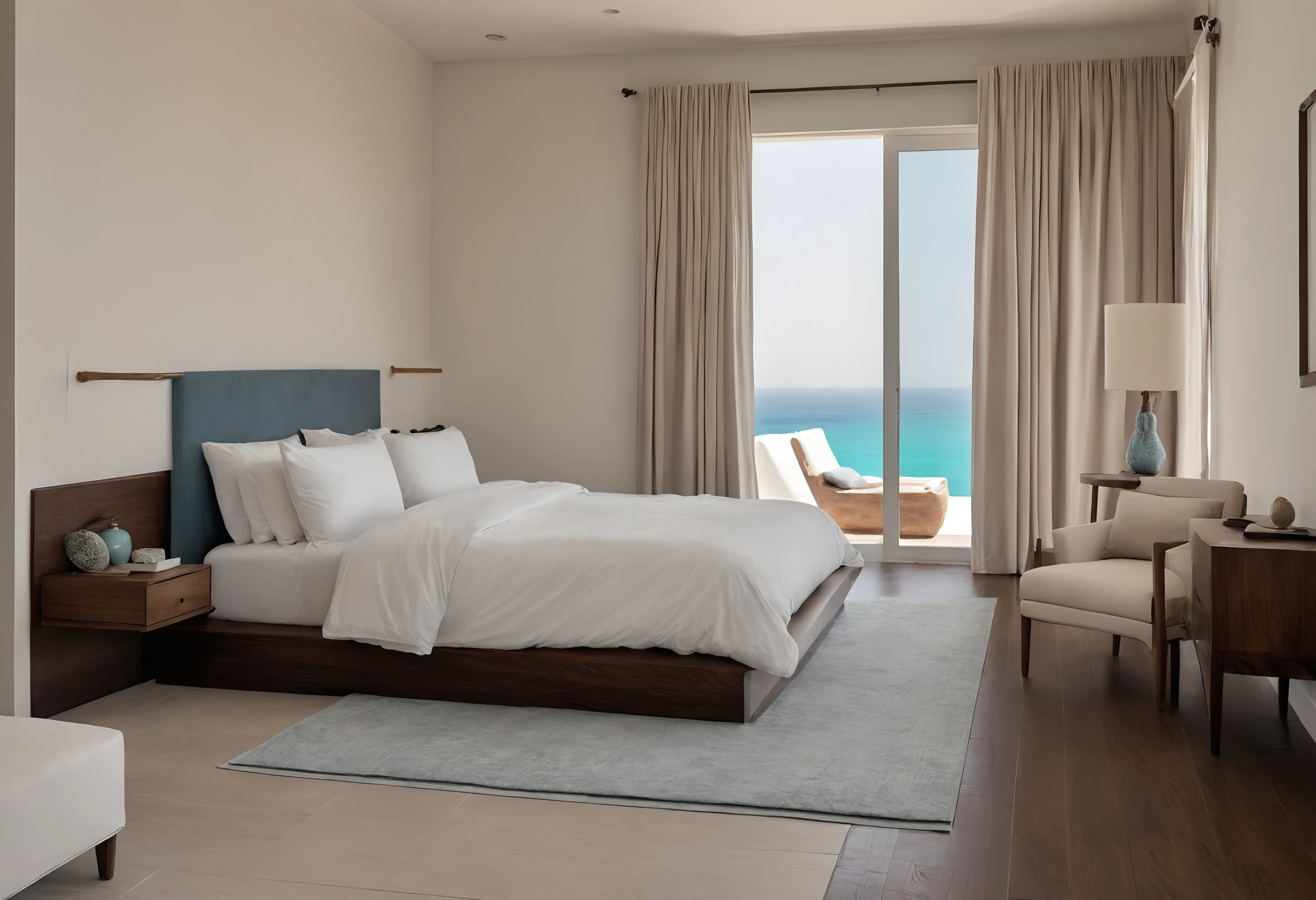
Quiet is a hotel product, and it comes from tested assemblies rather than thick doors alone. Ask for the laboratory rating of the complete door set, including frame and seals, and plan to check the installed result against it.
ASTM E90 covers the laboratory measurement of airborne sound transmission loss of walls, doors, windows and other space-dividing elements. E413 converts band-by-band results into a single number, which E90 names sound transmission class. E90 also notes that a measurement made on site, where sound travels around the element as well as through it, is called apparent sound transmission loss. A laboratory figure is therefore the best case, so check perimeter seals and threshold drops at handover.
Taps, handles and hinges in salt air
Coastal air attacks metal long before it marks stone or fabric, and a chrome finish that looks identical in a showroom can age very differently on a sea-facing balcony. A buyer can ask for corrosion-test evidence on bathroom fittings, door furniture and balcony hardware.
The salt spray method is defined by ASTM B117, which covers the apparatus, procedure and conditions for creating the salt fog environment. The standard itself does not prescribe the specimen type, the exposure period or how to interpret results. A supplier claiming a product is salt spray tested should therefore state the exposure period and the pass criteria, otherwise the claim cannot be compared with another product.
| Element | Test or standard | What it establishes |
|---|---|---|
| Upholstery fabric | ASTM D4966 | Abrasion resistance on the Martindale tester |
| Curtains and cushions in sun | Sunbrella fibre technology | UV-stabilised pigment carried through the fibre |
| Floor tile | ASTM C1028 | Static coefficient of friction, wet and dry |
| Doors and walls | ASTM E90 and E413 | Laboratory sound transmission loss, rated as sound transmission class |
| Metal fittings | ASTM B117 | Salt spray (fog) exposure conditions |
| Ventilation | ASHRAE 62.2-2025 | Ventilation and indoor air quality in residential buildings |
Ventilation and handover: where hotel practice stops
A hotel corridor system cannot simply be copied into a private floor plan. ASHRAE publishes Standard 62.1-2025 for commercial ventilation and Standard 62.2-2025 for residential buildings, so ask the developer which one governs your apartment before specifying lighting coves, stone bulkheads or sealed doors.
At handover, test every programmed lighting scene for smooth dimming without flicker at low output, look at grout lines and falls in wet areas, and check door seals. Keep the supplier test reports in one folder, because they are the evidence you need if a finish fails. Owners planning short-term lets should also read the holiday home licence and fee checks, and buyers of resale units can use the resale title, dues and snagging checks alongside it. More local context sits in the property and lifestyle articles.